Get research-backed answers about testosterone after 40: why it drops & what to do. This guide addresses the most common questions based on current evidence.
Key Takeaways
- Testosterone drops roughly 1–2% per year after 30 — by 40, cumulative decline becomes noticeable for many men
- Body-fat accumulation accelerates decline by converting testosterone to estrogen via aromatase
- Resistance training, sleep, and managing cortisol are the highest-impact levers for men over 40
- Zinc, vitamin D, and ashwagandha are the most research-supported additions when deficiencies or chronic stress are present
- Anyone with persistent symptoms should pursue a proper lab workup rather than self-treating
Related reading: How to Boost Testosterone Naturally, 8 Signs of Low Testosterone, Natural Testosterone Boosters, Zinc and Testosterone.
Why Testosterone Drops After 40
Testosterone in men peaks in the late teens and early 20s and begins a slow, steady decline starting around age 30. The annual drop averages 1–2% per year, which means a 40-year-old man has typically lost 10–20% of his peak testosterone compared to his 20s. This is a gradual trajectory — most men do not notice changes in their 30s, but by their mid-40s, the cumulative decline becomes symptomatic for a meaningful percentage of the population.
The decline has both primary and secondary drivers. Primary drivers: Leydig cell aging (the testicular cells that produce testosterone become less responsive to LH signaling), reduced LH pulse amplitude from the pituitary, and gradual increases in sex hormone binding globulin (SHBG), which reduces free, bioavailable testosterone.
Secondary drivers — and this is where most modifiable leverage lies — include body fat accumulation, chronic sleep deprivation, elevated cortisol, micronutrient deficiencies, and reduced physical activity. Secondary drivers typically account for the majority of what men experience as "low T at 40."
Body Fat and the Aromatase Problem
Adipose tissue is metabolically active — it is not inert storage. Fat cells contain aromatase, the enzyme that converts testosterone into estradiol (a form of estrogen). As men accumulate body fat through their 30s and 40s, aromatase activity rises, and a larger percentage of testosterone is converted to estrogen. This produces a compounding problem: less testosterone, more estrogen, and a shifted ratio that drives further fat accumulation and further aromatase activity.
Research by Kelly and Jones (2013, Journal of Endocrinology) detailed this feedback loop. Men with BMIs above 30 showed 30–40% lower total testosterone and significantly higher estradiol compared to normal-BMI controls of the same age — a magnitude of difference far larger than what pure aging explains.
The practical implication: body composition is one of the highest-leverage interventions for testosterone in men over 40. A 10–15% reduction in body fat often produces measurable testosterone increases, sometimes without any supplementation — simply by reducing aromatase activity.
Resistance Training as a Primary Lever
Resistance training has the strongest evidence base of any lifestyle intervention for supporting testosterone in aging men. Compound movements — squats, deadlifts, rows, presses — produce acute testosterone elevations post-workout and, more importantly, support long-term body-composition changes that reduce aromatase activity.
A 2020 review by Riachy and colleagues in Medicines (Basel) pooled data from multiple aging-male exercise trials. Resistance training 2–3 times per week consistently produced modest but meaningful increases in total and free testosterone, while endurance-only protocols did not. The mechanism combines acute hormonal response, muscle preservation, and reduced visceral fat.
For men over 40, the evidence-backed protocol is resistance training 3–4 days per week, focusing on compound lifts at moderate-to-heavy intensity (5–10 rep ranges), with adequate recovery between sessions. Excessive training volume without recovery elevates cortisol, which can worsen testosterone suppression — more training is not better past a certain threshold.
Research Snapshot
Measured Effects on Total Testosterone in Men Over 40
Average change vs. baseline or placebo across controlled trials. Hover any bar for the source.
Effects reported in men with baseline low T or specific deficiencies. Individual results vary. Not medical advice.
Sleep and Cortisol — The Free Interventions
The majority of daily testosterone production happens during sleep, specifically during the later REM cycles. Restricting sleep to 5 hours per night for just one week reduces testosterone by 10–15% in young healthy men, according to a 2011 trial by Leproult and Van Cauter in JAMA. For men over 40 with already-declining baseline T, chronic sleep deprivation compounds the decline substantially.
Cortisol and testosterone share precursor pathways and compete for the same biosynthetic resources. Chronic stress — whether from work, sleep deprivation, overtraining, or emotional load — elevates cortisol and directly suppresses testosterone production at the pituitary and at the Leydig cells. This is why stress management is not a soft intervention for men over 40; it is a primary hormonal lever.
The two free interventions with the highest documented impact: 7–9 hours of sleep nightly, and structured stress reduction (through training, outdoor time, breath work, and managing chronic low-grade stressors). These are often more impactful than any single supplement.
Micronutrients and Targeted Supplementation
Several micronutrients have documented roles in testosterone synthesis, and deficiencies are among the most correctable causes of low T in men over 40. Zinc deficiency suppresses testosterone production — correction raises T measurably in deficient men. Vitamin D deficiency (common in northern climates and indoor workers) is associated with lower testosterone; correction produces modest increases when baseline is low. Magnesium supports multiple enzymatic steps in steroid hormone synthesis.
Ashwagandha has the strongest evidence base of any herbal testosterone supplement. Wankhede et al., 2015 in the Journal of the International Society of Sports Nutrition (PMID 26609282) studied 57 resistance-trained males (mean age 28) on 600 mg/day KSM-66 for 8 weeks alongside training and reported a 15.3% increase in serum testosterone vs. 2.7% in placebo (p<0.001). The 14.7% figure that often gets attached to "KSM-66" actually comes from Lopresti et al., 2019 in Am J Mens Health (PMID 30854916), which used a different extract — Shoden by Arjuna Natural — given as two 300 mg tablets delivering 21 mg/day of withanolide glycosides; that 16-week crossover in overweight men aged 40–70 with mild fatigue measured a 14.7% rise in salivary testosterone. The shared mechanism across these trials is cortisol reduction — standardized ashwagandha extracts have lowered cortisol by ~27% in parallel work.
Tongkat ali and fenugreek have moderate supporting evidence. Many over-the-counter "T-booster" blends are dosed below research levels or use unstudied proprietary blends — ingredient transparency and research-aligned dosing matter more than brand marketing.
When to See a Healthcare Provider
Lifestyle and supplementation can address the majority of age-related testosterone decline, but not all of it. Men with persistent symptoms — fatigue, low libido, cognitive fog, significant strength loss, mood changes — despite 3–6 months of consistent lifestyle interventions should pursue a proper lab workup rather than continuing to self-treat.
A complete workup typically includes total testosterone, free testosterone, SHBG, LH, FSH, estradiol, and related panels (thyroid, CBC, lipids). Diagnosis of clinical hypogonadism requires both symptomatic presentation and confirmed low lab values, typically on two separate morning blood draws.
Hormone replacement therapy (TRT) is a medical decision that should be made with an informed provider. It is not a lifestyle supplement — the risk-benefit profile differs significantly between men with clinical hypogonadism and men pursuing T-boosting for performance. Anyone considering TRT should work with a provider who will monitor lab values, cardiovascular health, and prostate markers over time.
Frequently Asked Questions
Is low testosterone at 40 normal?
What are testosterone levels at age 40?
Can I raise my testosterone naturally at 40?
What supplements raise testosterone for men over 40?
Should I get testosterone therapy at 40?
Does alcohol lower testosterone?
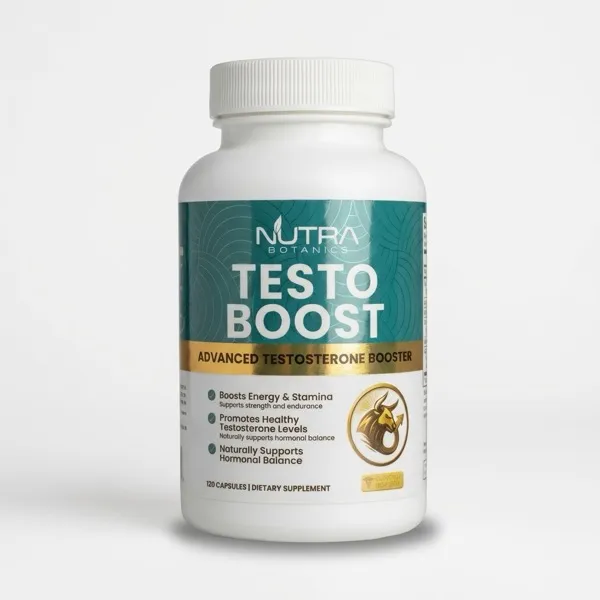
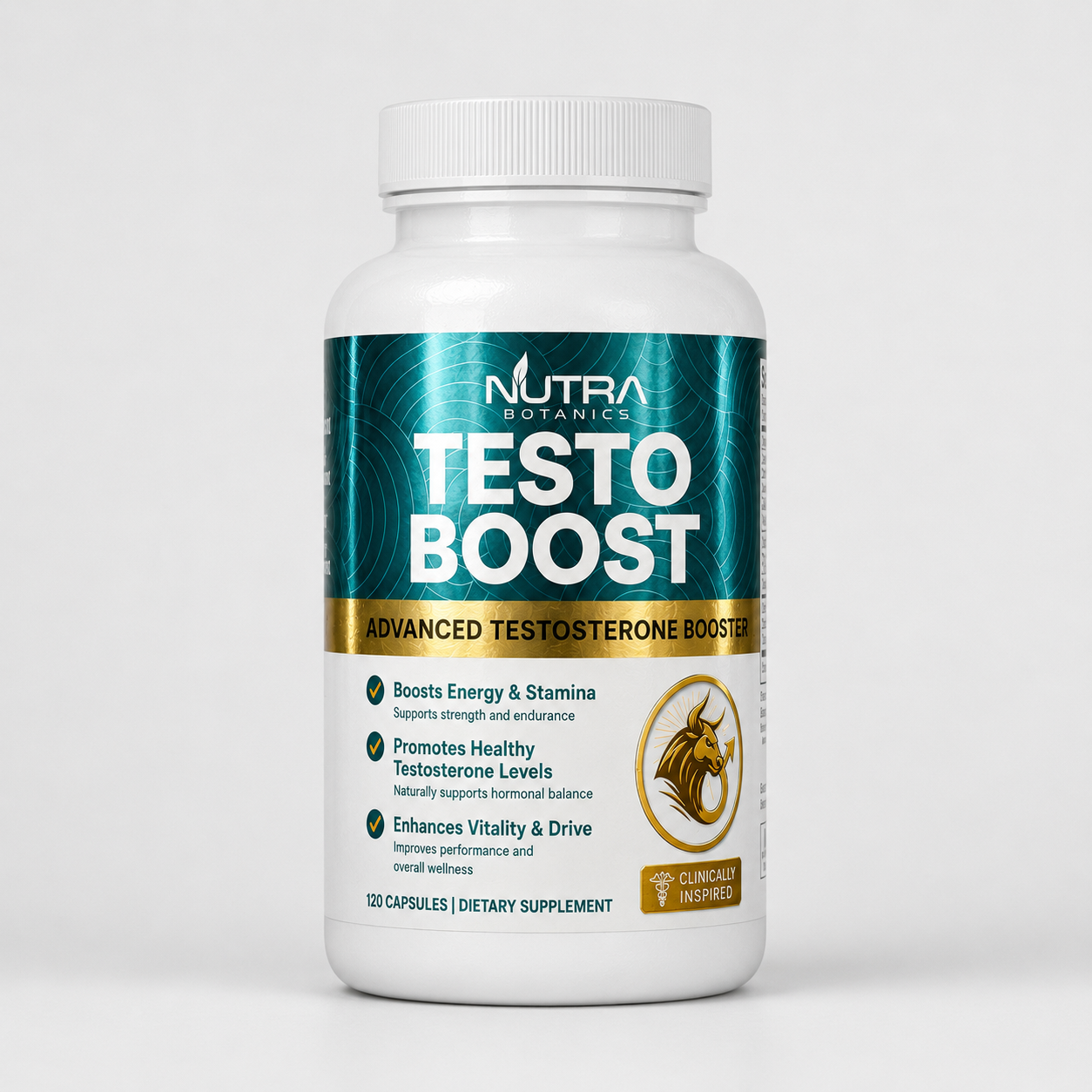
Testo Boost
Testosterone support · 30 servings
- A targeted formula men often stack alongside hormone-support habits — pairs with the lifestyle and nutrient foundations covered in this article.
$34.95Free shipping over $75
Shop Testo Boost
Explore the Full Catalog
Browse every Nutra Botanics formula
- Compare products, ingredients, and dosing across the full line
Shop the rangeSubscribe & save 20%
Shop All Products