

Key Takeaways
- Collagen production peaks in your mid-20s and declines steadily — by age 40 you have lost a significant portion of your reserves
- Seven common signals of low collagen: joint stiffness, wrinkles and sagging skin, brittle nails, thinning hair, slow wound healing, gut sensitivity, and unexplained muscle loss
- Types I and III are the most researched forms for skin, hair, nails, and gut lining support
- 10–20g per day of hydrolyzed collagen peptides is the clinically supported range for most adults
- Visible changes in skin, hair, and joints typically emerge between 8 and 12 weeks of consistent daily use
Related reading: Does Collagen Actually Work? (Research Review), 12 Foods That Boost Collagen Production, How Much Collagen Per Day, Best Time to Take Collagen.
Why Collagen Declines
Your body produces collagen naturally, but production peaks in your mid-20s and declines steadily after. By age 40, you have lost a significant portion. By 60, production can be cut in half. Sun exposure, smoking, high sugar intake, and chronic stress accelerate the decline.
1. Joint Stiffness and Creaky Knees
If your joints feel stiff when you wake up or your knees pop climbing stairs, depleted collagen may be contributing. Collagen makes up a major component of cartilage — the cushion between your bones. Research shows supplementing with hydrolyzed collagen supports cartilage health. Complementary ingredients like glucosamine and MSM further support joint lubrication.
*These statements have not been evaluated by the Food and Drug Administration. This product is not intended to diagnose, treat, cure, or prevent any disease. Individual results may vary.
At what age does collagen deficiency become noticeable?
Collagen production starts declining around age 25 at about 1% per year. Most people don't notice visible or functional effects until their mid-30s to early 40s, when the cumulative deficit becomes large enough to affect skin appearance, joint comfort, and tissue resilience. The decline accelerates significantly for women during perimenopause and menopause.*
Does diet affect collagen levels?
Yes, significantly. Diets high in sugar and refined carbohydrates accelerate collagen breakdown through a process called glycation. Vitamin C deficiency impairs collagen synthesis — the body cannot make collagen without it. Smoking dramatically accelerates collagen degradation. Eating collagen-rich foods such as bone broth and vitamin C-rich foods supports natural collagen production.*
Can collagen deficiency cause joint pain?
Yes. Cartilage — which cushions and protects joints — is primarily composed of Type II collagen. As collagen levels decline with age, cartilage integrity degrades, leading to joint discomfort, stiffness, and reduced range of motion. This is one of the primary mechanisms behind osteoarthritis. Collagen peptide supplementation has been shown to slow cartilage degradation in clinical research.*
Can a blood test show collagen levels?
Standard blood panels do not directly measure tissue collagen levels. Doctors can measure certain collagen metabolism markers in research settings, but this is not routine testing. In practice, the signs and symptoms — changes in skin, joints, hair, and nails — are the most practical indicators of collagen status for most people.*
How quickly can collagen supplementation address these signs?
The fastest-responding signs are nail brittleness (4–8 weeks) and skin dehydration (4–8 weeks). Skin elasticity and fine line improvements follow at 8–12 weeks. Joint stiffness and discomfort take the longest — typically 12–24 weeks of consistent supplementation at 10–15g per day. Hair thickness changes require 3–6 months of daily use.*
2. Wrinkles, Fine Lines, and Sagging Skin
The dermis is approximately 75% collagen. When it degrades faster than replaced, skin loses structure. Studies consistently show improvements in elasticity, hydration, and wrinkle depth with 8-12 weeks of daily collagen. Hyaluronic acid works alongside collagen to retain moisture from within.
3. Weak, Brittle, or Peeling Nails
The nail bed depends on collagen for structural support. One study found collagen supplementation led to a 12% increase in nail growth rate and 42% decrease in broken nails after 24 weeks.
4. Thinning Hair or Slower Growth
Hair follicles are surrounded by collagen-rich connective tissue. As collagen decreases, follicles can shrink. Collagen also provides proline and glycine — amino acids your body uses to build keratin.
5. Slow Wound Healing
Collagen is the primary structural protein laid down during wound repair. If cuts take longer to close or bruises linger, your body may lack sufficient collagen. Vitamin C is required for collagen synthesis — a supplement combining both ensures your body has what it needs.
6. Digestive Issues and Gut Sensitivity
Your GI tract lining is held together by collagen-rich connective tissue. When this weakens, the gut can become more permeable. Collagen provides glycine and glutamine, both important for maintaining intestinal lining integrity.
Collagen provides glycine and glutamine, both important for maintaining intestinal lining integrity.
7. Unexplained Muscle Loss
Collagen supports the connective tissue surrounding muscle fibers. Research found collagen supplementation combined with resistance training led to greater muscle mass and strength gains than training alone.
What You Can Do
If you recognized yourself in two or more signs, a high-quality collagen supplement taken consistently can help. Look for hydrolyzed peptides at 5,000mg+ per day, complementary ingredients, and liquid format for fastest absorption. Most people notice improvements within 4-8 weeks.
Give Your Body the Collagen It Needs
Super Collagen Liquid delivers 6,000mg hydrolyzed collagen plus 6 active ingredients in one daily serving. 32 servings for $1.41/day.
Try Super Collagen Liquid →Give Your Body the Collagen It Needs
Super Collagen Liquid delivers 6,000mg hydrolyzed collagen plus 6 active ingredients in one daily serving. 32 servings for $1.41/day.
Try Super Collagen Liquid →Frequently Asked Questions
How do I know if my body needs more collagen?
At what age does collagen deficiency become noticeable?
Does diet affect collagen levels?
Can collagen deficiency cause joint pain?
Can a blood test show collagen levels?
How quickly can collagen supplementation address these signs?
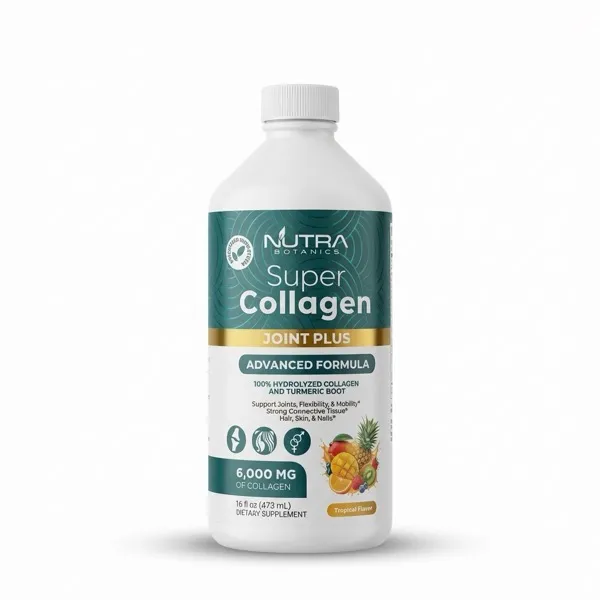
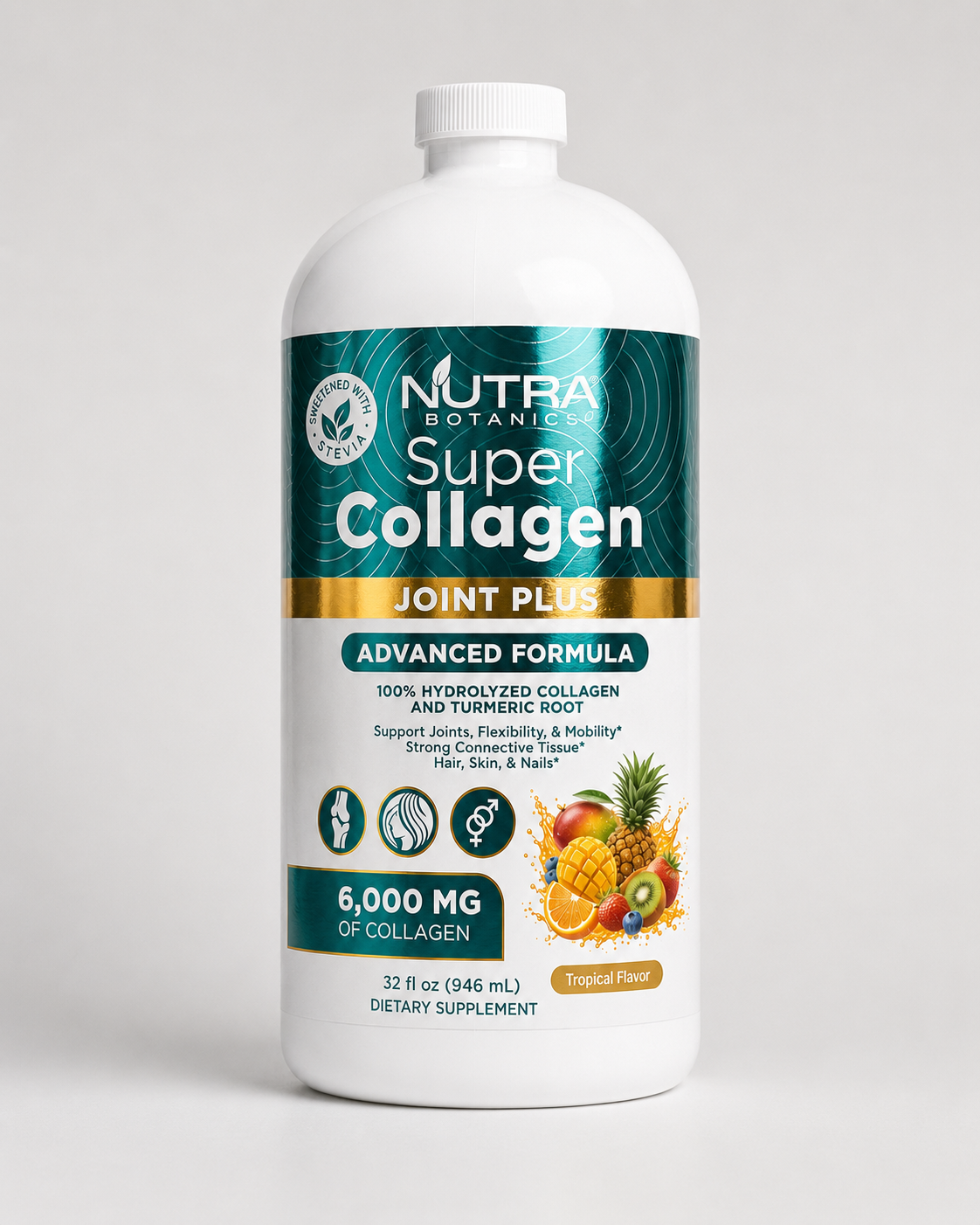
Super Collagen Liquid
Hydrolyzed Peptides · 30 servings
- 6,000mg hydrolyzed collagen peptides per serving
- Liquid format for maximum bioavailability
- Supports hair, nails, skin, and joints
- GMP & NSF certified · PhD-supervised testing
$39.95Free shipping over $75
Shop Super Collagen
Explore All Collagen Products
Browse the Nutra Botanics collagen range
- Multiple formats: liquid peptides, powders, capsules
- Compare serving sizes, sources, and stack partners
- Find the right format for your routine
- GMP & NSF certified · PhD-supervised testing
Shop the rangeSubscribe & save 20%
Browse Collagen