
Key Takeaways
- Creatine is not a steroid and does not alter hormones — it is an amino-acid derivative found naturally in meat
- It does not damage the kidneys in healthy individuals; this myth comes from a single misread lab marker (creatinine)
- Creatine does not cause hair loss — the one study cited (2009 rugby players) did not measure hair loss directly
- 3–5g per day is the clinically effective dose; loading phases are optional and mainly shorten time-to-saturation
- It benefits strength, power, brain performance, and healthy aging — not just bodybuilders
Related reading: Creatine for Women, Creatine for Beginners, How to Take Creatine, When to Take Creatine.
What Creatine Actually Does
To understand creatine, you need to understand how your muscles produce energy during short, intense efforts. When you perform a heavy squat, sprint, or explosive jump, your muscles burn through a molecule called adenosine triphosphate (ATP). ATP is the direct energy currency of every cell in your body, and your muscles only store enough of it for about 8 to 10 seconds of maximal effort.
When ATP is used, it loses a phosphate group and becomes adenosine diphosphate (ADP), which is essentially a spent battery. This is where creatine enters the picture. Your body stores creatine as phosphocreatine in muscle tissue. Phosphocreatine donates its phosphate group to ADP, rapidly regenerating it back into ATP. More creatine in your muscles means a faster rate of ATP regeneration, which translates to more reps, more power output, and faster recovery between sets.
Your body produces about 1 to 2 grams of creatine daily from the amino acids glycine, arginine, and methionine, primarily in the liver and kidneys. You also get creatine from animal proteins, particularly red meat and fish. A pound of raw beef contains roughly 2 grams of creatine. Supplementation simply increases the stored pool of phosphocreatine in your muscles beyond what diet and natural production can achieve, typically by 20 to 40 percent.
The Myths, Debunked
Myth 1: Creatine Damages Your Kidneys
This is the most persistent myth and the most thoroughly debunked. The confusion stems from creatinine, a breakdown product of creatine that is measured in standard kidney function blood tests. When you supplement with creatine, your creatinine levels rise slightly. A doctor unfamiliar with creatine supplementation might flag this as a kidney concern. But elevated creatinine from creatine supplementation is not the same as elevated creatinine from kidney damage.
Multiple long-term studies, including studies lasting up to five years of daily creatine use, have found no adverse effects on kidney function in healthy individuals. A comprehensive review published in the Journal of the International Society of Sports Nutrition in 2017 concluded that creatine supplementation does not impair renal function in healthy individuals at any dosage studied. The caveat is for individuals with pre-existing kidney disease, who should consult their physician before supplementing with anything that alters creatinine levels.
Myth 2: Creatine Is a Steroid
Creatine is not a steroid, not a prohormone, not anabolic in the hormonal sense, and not banned by any sports organization. It is a naturally occurring compound found in every piece of meat you have ever eaten. It does not alter testosterone, growth hormone, or any other hormonal pathway. The World Anti-Doping Agency (WADA) has never banned or restricted creatine, and the NCAA permits its use. Calling creatine a steroid is like calling caffeine an amphetamine because both increase alertness.
Myth 3: Creatine Is Only Water Weight
Creatine does cause water retention, but not the kind most people imagine. The water is drawn into the muscle cells themselves (intracellular), not under the skin (subcutaneous). This intracellular hydration actually serves a functional purpose: it creates a more anabolic environment for muscle protein synthesis and may contribute to long-term muscle growth beyond the initial water effect. Studies consistently show that creatine users gain more lean muscle mass than placebo groups over training periods of 8 to 12 weeks, even after accounting for the initial water weight increase.
Myth 4: Creatine Is Only for Bodybuilders
This myth ignores the broadest and most interesting body of creatine research. While creatine certainly benefits strength athletes, research has demonstrated benefits for endurance athletes (improving repeated sprint performance and high-intensity intervals), older adults (combating age-related muscle loss), vegetarians (who have lower baseline creatine stores), and even non-athletes seeking cognitive benefits.
The Real Benefits Beyond Muscle
The strength and muscle benefits of creatine are well established, but the research has expanded far beyond the weight room in recent years.
Cognitive function is one of the most promising areas. Your brain uses a tremendous amount of ATP, and creatine is stored in brain tissue just as it is in muscle tissue. A 2018 systematic review found that creatine supplementation improved short-term memory and reasoning in healthy adults, with the most significant effects seen during periods of sleep deprivation or mental fatigue. For anyone who trains hard and juggles a demanding job, this dual benefit of physical and mental performance is significant.
Age-related muscle loss (sarcopenia) is another area where creatine shows real promise. After age 30, adults lose approximately 3 to 8 percent of muscle mass per decade, accelerating after 60. Multiple studies have shown that creatine combined with resistance training in older adults produces significantly greater gains in lean mass and strength compared to resistance training alone. Given that muscle mass is one of the strongest predictors of longevity and quality of life in older adults, this application may ultimately prove to be creatine's most impactful use.
Bone health research is still emerging but encouraging. Some studies suggest that creatine supplementation combined with resistance training may improve bone mineral density, particularly in postmenopausal women. The mechanism is likely indirect, working through increased mechanical loading from stronger muscles rather than a direct effect on bone metabolism.
Who Benefits from Creatine
The short answer is: almost everyone who exercises regularly. But some populations see larger benefits than others.
Strength and power athletes are the most obvious beneficiaries. If your training involves lifting heavy, sprinting, jumping, or any repeated high-intensity effort, creatine will directly improve your work capacity and recovery between sets. The effect is most pronounced in exercises lasting 6 to 30 seconds, which covers most resistance training sets.
Vegetarians and vegans typically see the largest response to creatine supplementation because their baseline muscle creatine stores are lower due to the absence of meat in their diet. Studies show that vegetarians may experience up to twice the improvement in lean mass and strength compared to omnivores when supplementing with creatine.
Adults over 40 benefit from creatine's ability to support muscle retention and strength maintenance. The combination of creatine with consistent resistance training is one of the most evidence-based strategies for combating age-related muscle and strength loss.
Endurance athletes benefit more than many expect. While creatine does not directly improve steady-state endurance, it improves the ability to perform repeated high-intensity efforts, such as surges during a race, hill climbs, or finishing kicks. It also supports recovery between training sessions.
How to Take It: Loading vs. Daily Dosing
There are two common approaches to creatine supplementation, and both work. The difference is speed.
The loading protocol involves taking 20 grams per day (split into four 5-gram doses) for 5 to 7 days, followed by a maintenance dose of 3 to 5 grams daily. This saturates your muscle creatine stores in about a week. Some people experience mild bloating or GI discomfort during the loading phase due to the high daily dose.
The daily dosing protocol skips the loading phase entirely and starts at 3 to 5 grams per day from day one. This takes approximately 3 to 4 weeks to fully saturate muscle creatine stores but avoids any GI discomfort. After 4 weeks, your muscle creatine levels are identical regardless of which approach you used.
Timing is less important than consistency. Some research suggests a slight advantage to taking creatine post-workout with a carbohydrate source (which enhances insulin-mediated creatine uptake into muscle cells), but the difference is marginal. The most important thing is taking it daily. Creatine works through saturation, not acute dosing. Missing a single day is irrelevant, but missing a week can reduce your muscle stores.
Type matters less than you think. Creatine monohydrate is the original and most studied form. Despite marketing claims for creatine HCl, buffered creatine, creatine ethyl ester, and other variants, no alternative form has been shown to outperform monohydrate in any peer-reviewed study. Micronized creatine monohydrate simply has a finer particle size for better mixing and absorption, but it is still monohydrate. Do not pay a premium for fancy forms when the research universally supports the original.
Creatine vs. Pre-Workout: Different Tools
One of the most common points of confusion is the relationship between creatine and pre-workout supplements. They are fundamentally different products that serve different purposes, but they are often conflated because both live in the "performance supplement" category.
Pre-workout gives you an immediate boost for that specific session. Creatine increases your baseline capacity over weeks and months. They are not competitors. Many serious athletes use both: creatine daily for long-term performance, and pre-workout on days when they need an extra edge. But if you had to choose only one supplement for long-term strength and performance gains, creatine would win on the evidence every time.
Key Takeaways
Key Takeaway
Creatine monohydrate is the most extensively researched sports supplement in existence, with over 500 studies confirming its safety and efficacy. It does not damage kidneys in healthy people, it is not a steroid, and it benefits far more than just bodybuilders. It works by increasing your muscles' ability to regenerate ATP, leading to more strength, more reps, faster recovery, and greater lean mass gains over time. Take 3-5 grams daily (loading is optional), stick with micronized monohydrate, and be consistent. At roughly $0.50 per day, it offers the best return on investment of any supplement on the market.Frequently Asked Questions
Is creatine a steroid?
Does creatine cause kidney damage?
Will creatine cause hair loss?
Does creatine cause water retention or bloating?
Is creatine only for bodybuilders and strength athletes?
Do I need to cycle creatine on and off?
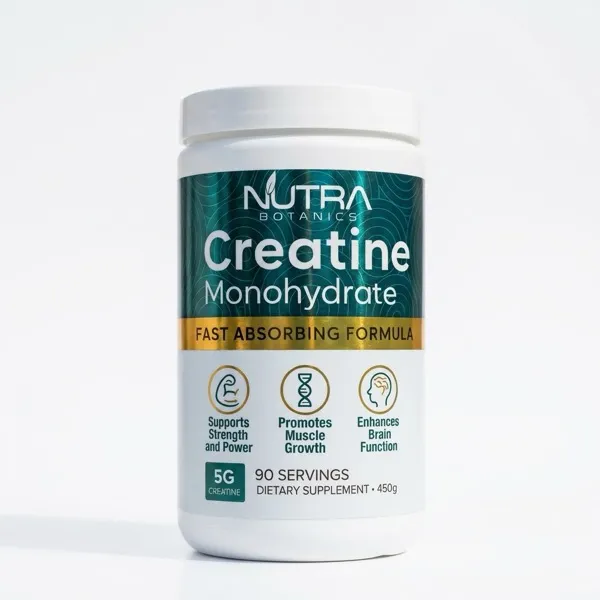
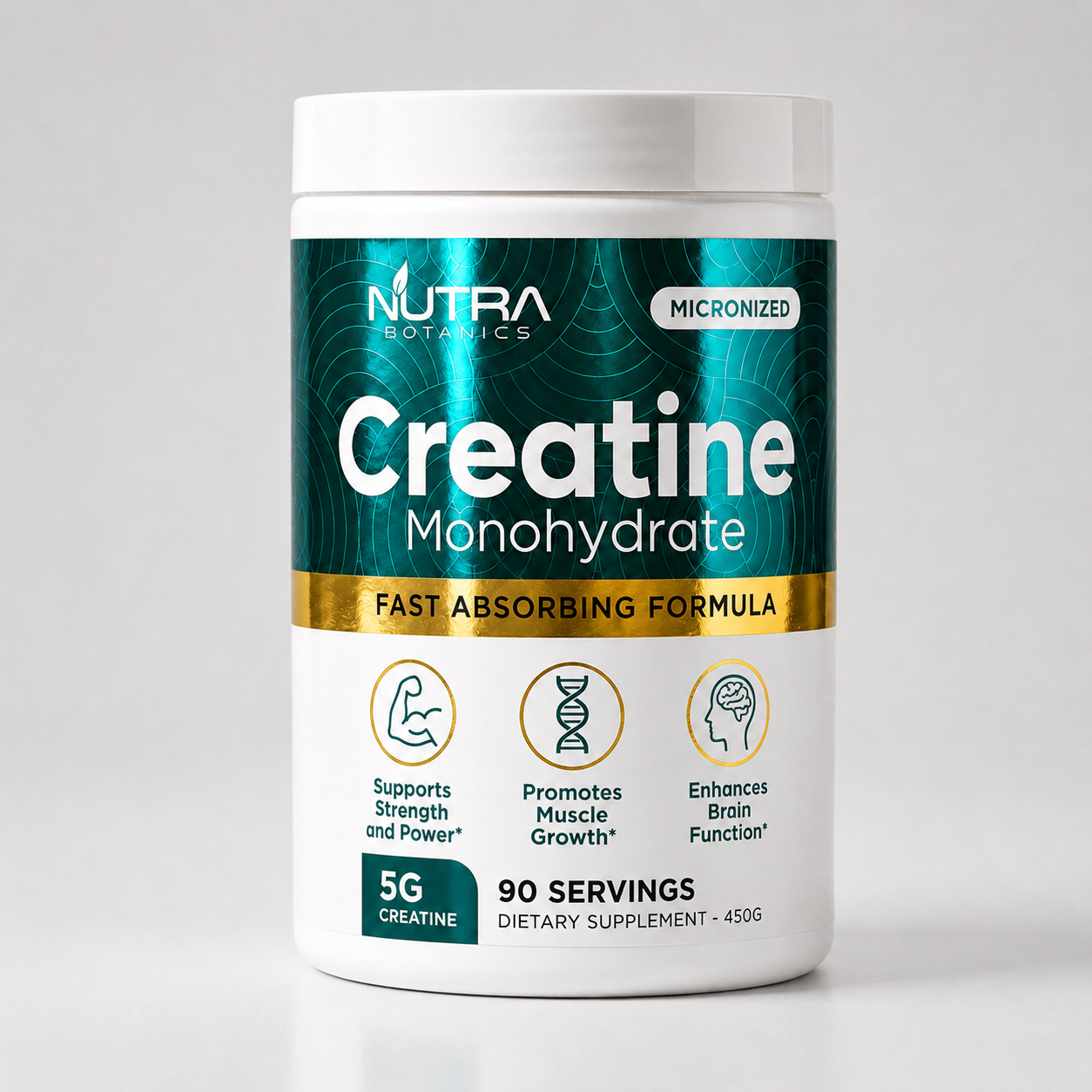
Micronized Creatine Monohydrate
5g pure creatine per serving · 60 servings
- Pure creatine monohydrate · no fillers or blends
- Micronized for easier mixing and absorption
- Unflavored · stacks cleanly with any routine
- GMP & NSF certified · PhD-supervised testing
See pricingFree shipping over $75
Shop Creatine Monohydrate
Explore Performance Support
Browse the Nutra Botanics performance range
- Creatine, BCAA, EAA, and pre-workout options
- Compare formats, dosing, and stack partners
- GMP & NSF certified · PhD-supervised testing
- Subscribe to save 20% on recurring shipments
Shop the rangeSubscribe & save 20%
Browse Performance