

Related reading: Does Collagen Actually Work? (Research Review), 12 Foods That Boost Collagen Production, Best Time to Take Collagen, Marine vs Bovine Collagen.
Why Collagen Dosage Matters
Collagen is the most abundant protein in the human body, making up roughly 30 percent of total protein mass. It provides structural support to your skin, bones, cartilage, tendons, and blood vessels. After the age of 25, your body's natural collagen production begins to decline at a rate of approximately 1 to 1.5 percent per year. By age 50, most people have lost a significant portion of their collagen stores, which manifests as wrinkles, joint stiffness, weaker bones, and slower recovery from exercise or injury.
Taking the right dose of collagen is critical because underdosing means you may not reach the threshold needed to trigger meaningful biological effects. Overdosing, while generally safe, wastes money and provides no additional benefit beyond a certain point. Clinical research has established effective dose ranges for different health outcomes, and understanding these ranges is the key to getting real results from your supplement.
Recommended Doses by Health Goal
Different health goals require different amounts of collagen. The table below summarizes the research-informed dose ranges for the most common supplementation goals.
| Health Goal | Recommended Daily Dose | Collagen Type | Time to Results |
|---|---|---|---|
| Skin Health & Anti-Aging | 5-10g | Type I, Type III | 4-8 weeks |
| Joint Support | 10-15g | Type II | 8-12 weeks |
| Hair & Nails | 5g | Type I | 8-12 weeks |
| Gut Health | 10-15g | Type I, Type III | 6-8 weeks |
| Muscle & Recovery | 15-20g | Type I | 4-12 weeks |
For most people pursuing general health and anti-aging benefits, a dose of 5 to 10 grams per day is sufficient. If you are specifically targeting joint health or athletic recovery, you will likely need to increase to 10 to 15 grams or more. Athletes engaged in high-impact training or those recovering from tendon or ligament injuries may benefit from doses at the higher end of the range, up to 20 grams per day when taken 30 to 60 minutes before exercise.

Clinically Studied Collagen Doses
The following chart shows the dose ranges that have been used in major peer-reviewed clinical studies. These are not theoretical recommendations but rather the actual amounts that produced measurable results in controlled research settings.
How Your Body Uses Collagen Peptides
When you consume hydrolyzed collagen, your digestive system breaks the peptides down into smaller di- and tripeptides, as well as individual amino acids such as glycine, proline, and hydroxyproline. These small peptides are absorbed through the intestinal wall into the bloodstream.
Research using radioactively labeled collagen has shown that these peptides accumulate preferentially in collagen-rich tissues such as skin, cartilage, and bone. Once there, they serve a dual purpose: they provide raw material for new collagen synthesis and they act as signaling molecules that stimulate fibroblasts and chondrocytes to increase their own collagen production.
Hydrolyzed collagen peptides are highly bioavailable, meaning the body can readily absorb and utilize them. Research suggests hydrolyzed forms are more efficiently absorbed than collagen obtained from whole food sources like bone broth, which has variable absorption rates.
The type of hydrolyzation process matters for absorption. Enzymatic hydrolysis produces peptides with an average molecular weight of 2,000 to 5,000 daltons, which is the optimal range for intestinal absorption. Cheaper collagen products may use less refined processing methods that result in larger peptide fragments with reduced bioavailability. This is one reason why quality matters just as much as dosage when selecting a collagen supplement.
Best Time to Take Collagen
Best time to take collagen: Collagen can be taken at any time of day, but research suggests two optimal windows. Taking collagen first thing in the morning on an empty stomach may enhance absorption. For athletes, taking collagen 30 to 60 minutes before exercise with vitamin C has been shown to increase collagen synthesis in tendons and ligaments by up to 100 percent.
Best time to take collagen: Collagen can be taken at any time of day, but research suggests two optimal windows.
Pair with vitamin C: Vitamin C is an essential cofactor in collagen synthesis. Without adequate vitamin C, your body cannot properly convert collagen peptides into functional collagen fibers. Take 50 to 100 mg of vitamin C alongside your collagen supplement for optimal results. A glass of orange juice, a kiwi, or a small vitamin C supplement will do the job.
Consistency over timing: The most important factor is taking your collagen every single day. The timing matters far less than the consistency. Choose a time that fits naturally into your routine and stick with it.
Adjusting Dose by Age and Activity Level
Your ideal collagen dose should account for your age and lifestyle. Younger adults in their 20s and early 30s who are supplementing primarily for skin health or general maintenance can often achieve good results with 5 grams per day. Individuals over 40, whose collagen production has declined more significantly, typically benefit from 10 to 15 grams per day, especially if they are experiencing joint stiffness or visible skin aging.
Active individuals and athletes have higher collagen turnover rates due to the mechanical stress placed on their connective tissues during training. For these individuals, doses of 15 to 20 grams per day are well-supported by research, particularly when taken before exercise. Competitive athletes recovering from tendon or ligament injuries may benefit from the higher end of this range under the guidance of a sports medicine professional.
Regardless of age or activity level, it is important to give your collagen regimen adequate time to work. While some people notice improvements in skin hydration within 4 weeks, joint and tendon benefits typically require 8 to 12 weeks of consistent daily supplementation. Full benefits, including improvements in bone density and deep skin structural changes, may take 90 days or longer to manifest.
Can You Take Too Much Collagen?
Collagen supplements have an excellent safety profile, and no serious adverse effects have been reported in clinical trials even at high doses. However, there is a point of diminishing returns. Taking more than 20 grams per day is unlikely to provide additional benefits for most people, as the body can only utilize a certain amount of collagen peptides within a given timeframe.
Some people may experience mild digestive discomfort, such as bloating or a feeling of fullness, when first starting collagen supplementation or when taking larger doses. This is typically temporary and resolves within a few days as the digestive system adapts. Starting with a lower dose and gradually increasing over a week can help minimize any initial discomfort.
*These statements have not been evaluated by the Food and Drug Administration. This product is not intended to diagnose, treat, cure, or prevent any disease. Individual results may vary.
Key Takeaways
- The minimum effective dose for collagen is 2.5 grams per day, but most health goals require 5 to 15 grams for optimal results.
- Match your dose to your goal: 5-10g for skin, 10-15g for joints, and 15-20g for athletic recovery and muscle support.
- Pair collagen with vitamin C to maximize your body's ability to synthesize new collagen fibers.
- Consistency matters more than timing. Take collagen daily for at least 90 days to experience the full range of benefits.
- Start with a lower dose and increase gradually to minimize any mild digestive adjustment symptoms.
Find Your Perfect Collagen Dose
Explore our range of premium collagen supplements in liquid and capsule forms, each with clearly labeled doses backed by clinical research.
Shop CollagenCan I take too much collagen per day?
No established tolerable upper limit exists for collagen. Studies have administered up to 40g per day without adverse effects. Doses above 15g per day produce diminishing returns for most goals — the extra amino acids are metabolized as regular protein. For healthy adults, 10–15g per day is safe, effective, and the most practical daily dose.*
Should I split my collagen dose or take it all at once?
Both approaches work equally well in research. If you experience any digestive discomfort with a large single dose, splitting into two servings — morning and post-workout for example — can help. The most important factor is total daily dose and taking it consistently every day. Splitting versus single-dosing has minimal impact on outcomes.*
How much collagen is in bone broth?
Homemade bone broth typically contains 2–5g of collagen per cup depending on cooking method and bone concentration. Commercial bone broth varies widely — some contain as little as 0.5g per cup. To reach the 10–15g per day threshold supported by research, you would need to drink 3–7 cups of strong bone broth daily, making supplements a far more practical option.*
Does the dose need to change as I get older?
As collagen production naturally declines with age — particularly after 40 for women — maintaining or slightly increasing your dose may make sense. The research on postmenopausal women showing the strongest benefits used 10–15g per day. People under 35 may see adequate results at the lower end (5–10g per day), while those over 40 may benefit more from the higher end of the dose range.*
Is more collagen always better?
No. There is a dose ceiling around 15g per day beyond which additional collagen provides minimal extra benefit. Above this dose, the body simply metabolizes the excess amino acids for general energy. The sweet spot for most people is 10–15g per day of hydrolyzed collagen peptides taken consistently every day.*
Find Your Perfect Collagen Dose
Explore our range of premium collagen supplements in liquid and capsule forms, each with clearly labeled doses backed by clinical research.
Shop CollagenFrequently Asked Questions
How much collagen should I take per day?
Can I take too much collagen per day?
Should I split my collagen dose or take it all at once?
How much collagen is in bone broth?
Does the dose need to change as I get older?
Is more collagen always better?
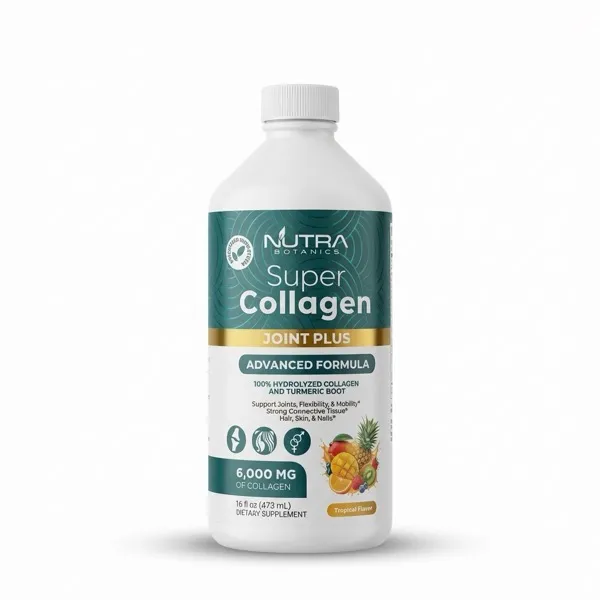
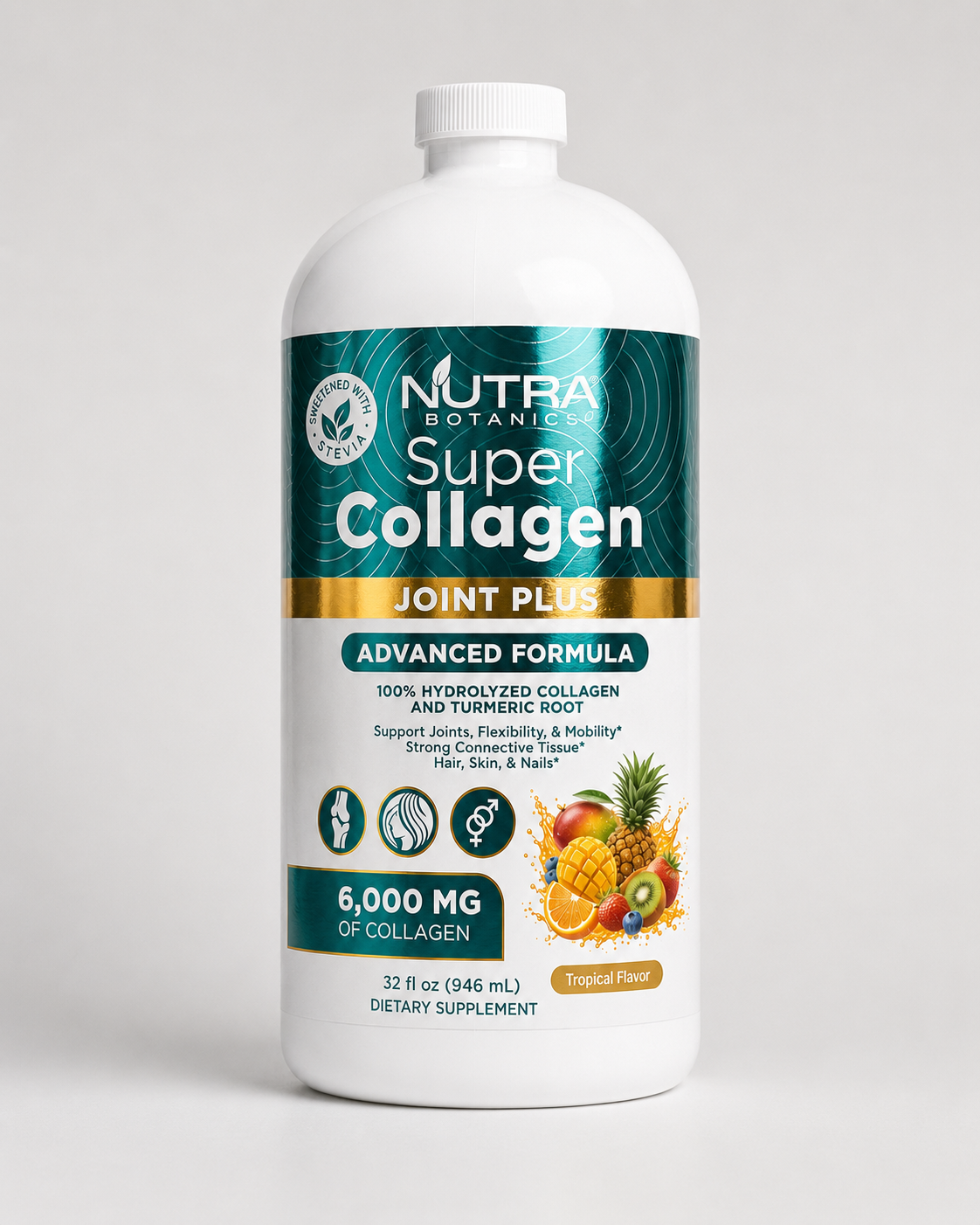
Super Collagen Liquid
Hydrolyzed Peptides · 30 servings
- 6,000mg hydrolyzed collagen peptides per serving
- Liquid format for maximum bioavailability
- Supports hair, nails, skin, and joints
- GMP & NSF certified · PhD-supervised testing
$39.95Free shipping over $75
Shop Super Collagen
Explore All Collagen Products
Browse the Nutra Botanics collagen range
- Multiple formats: liquid peptides, powders, capsules
- Compare serving sizes, sources, and stack partners
- Find the right format for your routine
- GMP & NSF certified · PhD-supervised testing
Shop the rangeSubscribe & save 20%
Browse Collagen