
Related reading: Does Collagen Actually Work? (Research Review), 12 Foods That Boost Collagen Production, How Much Collagen Per Day, Best Time to Take Collagen.
What Is Collagen and Why Does It Matter?
Collagen is a structural protein that makes up approximately 30 percent of all the protein in your body. Think of it as the scaffolding that holds everything together. It provides structure to your skin, strength to your bones, cushioning to your joints, and integrity to your connective tissues. There are at least 28 known types of collagen, but Types I, II, and III account for roughly 90 percent of all collagen in your body.
Type I collagen is the most abundant and is found primarily in skin, tendons, bones, and organs. Type II is concentrated in cartilage and joints. Type III supports the structure of muscles, organs, and arteries. For women over 40, all three types become critically important as natural production slows and existing collagen fibers begin to break down faster than they can be replaced.
The Science Behind Collagen Decline After 40
Collagen production peaks in your early twenties and begins a gradual decline of about one percent per year after age 25. By the time you reach 40, you have already lost a significant portion of your body's collagen stores. But after 40, the decline accelerates to approximately two percent per year, and for women, the situation becomes even more pronounced around menopause.
This decline is not merely cosmetic. Reduced collagen levels affect everything from how your skin looks and feels to how well your joints move, how strong your bones are, and even how efficiently your gut functions. Understanding this timeline is the first step toward taking proactive action.
The Menopause-Collagen Connection
For women, menopause represents a watershed moment in collagen health. Estrogen plays a vital role in stimulating collagen production, and as estrogen levels plummet during perimenopause and menopause, collagen synthesis drops off dramatically. Research has shown that women can lose up to 30 percent of their skin collagen in the first five years after menopause, followed by an average decline of about two percent per year for the next 20 years.
"In the first five years after menopause, women lose approximately 30% of their skin collagen. This rapid decline is directly linked to the drop in estrogen, which plays a crucial role in maintaining collagen synthesis and preventing collagen degradation."
Journal of the American Academy of Dermatology, 2019This estrogen-collagen connection explains why many women experience a seemingly sudden acceleration of aging symptoms around menopause. Skin that was relatively smooth and firm can develop visible wrinkles and sagging in just a few years. Joints that never gave trouble can start aching during routine activities. These changes are not just about getting older; they are directly related to the hormonal shifts that drastically reduce your body's ability to maintain its collagen infrastructure.
Recognizing the Signs of Collagen Loss
Collagen loss does not happen all at once. It manifests gradually through a series of signs that many women dismiss as simply "getting older." Knowing what to look for can help you take action before these changes become pronounced.
Research Snapshot
Collagen Peptide Outcomes in Women 40+
Average changes vs. placebo in women aged 40+ across 8–24 week RCTs.
*Combined with resistance training. Individual results vary. Not medical advice.
Key Benefits of Collagen for Women Over 40
The research supporting collagen supplementation for women over 40 is robust and growing. Multiple randomized, double-blind, placebo-controlled trials have demonstrated significant benefits across several areas that matter most to women in this age group.
Skin Elasticity and Hydration

Studies show that women who take hydrolyzed collagen peptides for eight to twelve weeks experience measurable improvements in skin elasticity, hydration, and wrinkle depth. One landmark study found a 20 percent reduction in eye wrinkle volume after just eight weeks of supplementation. The collagen peptides stimulate your body's own fibroblasts, the cells responsible for producing new collagen, elastin, and hyaluronic acid.
Joint Comfort and Mobility
For women dealing with joint discomfort, collagen supplementation has been studied for its role in supporting joint health and mobility. Type II collagen in particular is associated with joint cartilage support, while hydrolyzed collagen peptides may support the connective tissue in the joint space.* Many women who use collagen consistently report improved comfort and mobility as part of their overall wellness routine.*
Bone Density Support
After menopause, women are at significantly increased risk for osteoporosis. Collagen makes up about 90 percent of the organic matrix of bone, and research shows that collagen supplementation can help slow bone mineral density loss when combined with calcium and vitamin D. This is particularly important for women who want to maintain an active lifestyle as they age.
Hair and Nail Strength
Collagen provides the amino acids proline and glycine, which are essential building blocks for keratin, the protein that makes up your hair and nails. Women who supplement with collagen often report stronger nails that grow faster, as well as thicker, more resilient hair. Studies have shown a 12 percent increase in nail growth rate and a 42 percent decrease in broken nails after just four weeks of biotin and collagen supplementation.
Collagen supplementation after 40 is not a luxury; it is a strategic investment in your long-term health. The benefits extend far beyond skin deep, supporting joint mobility, bone density, hair thickness, nail strength, and gut health. Starting supplementation before or during the early stages of menopause can help offset the rapid collagen loss that occurs during this transition.
Choosing the Right Collagen Supplement
Not all collagen supplements are created equal. When selecting a collagen product, there are several factors that determine how effective it will be. Look for hydrolyzed collagen peptides, which have been broken down into smaller molecules for optimal absorption. Liquid collagen formulas tend to offer superior bioavailability compared to capsules or powders because they bypass the need for your digestive system to break them down further.
The best collagen supplements also include complementary ingredients that enhance collagen synthesis and absorption. Vitamin C is essential because it serves as a cofactor in the collagen production process. Without adequate vitamin C, your body cannot properly synthesize new collagen, regardless of how much collagen you consume.
*These statements have not been evaluated by the Food and Drug Administration. This product is not intended to diagnose, treat, cure, or prevent any disease. Individual results may vary.
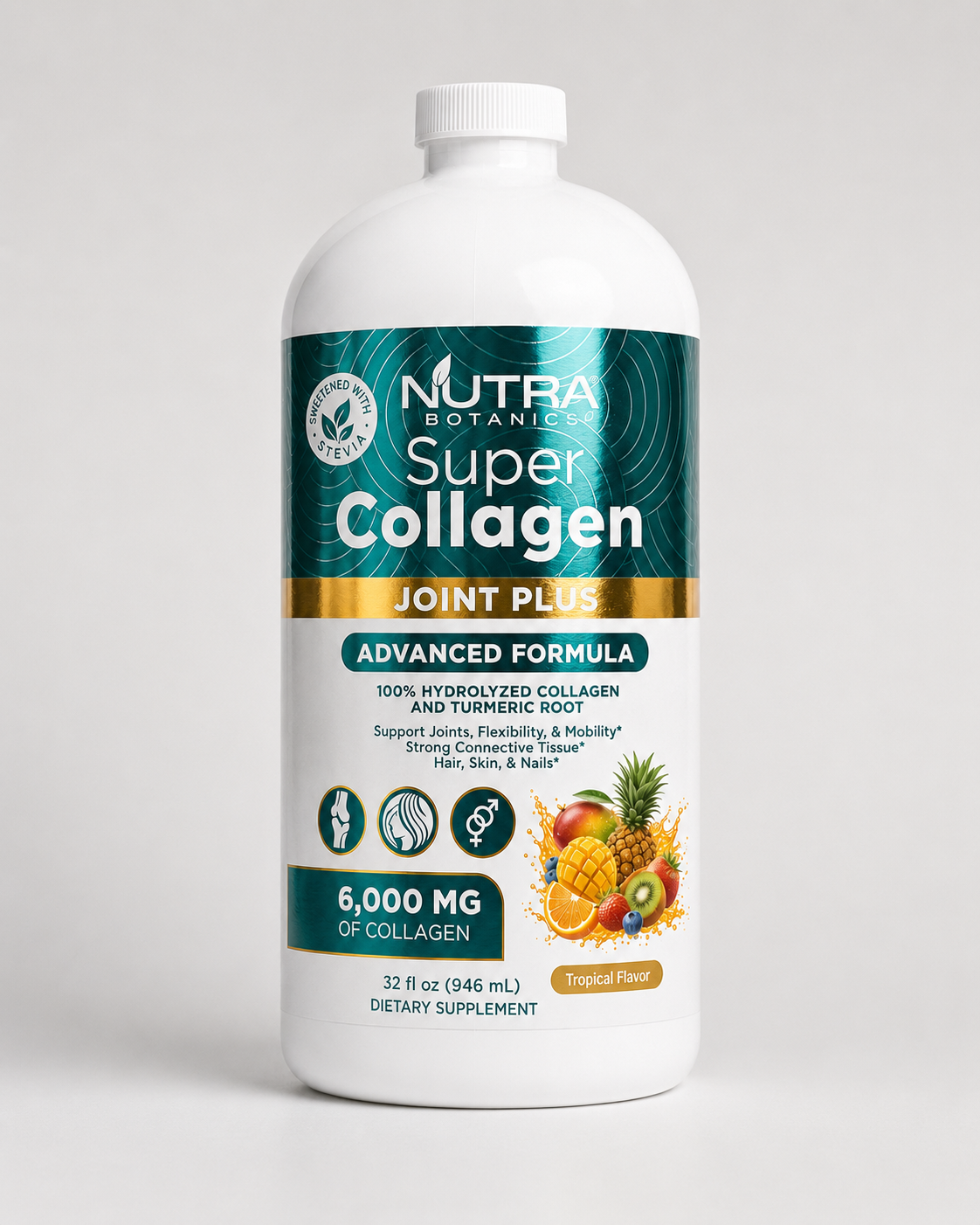
Nutrients That Pair Perfectly with Collagen
While collagen supplementation is powerful on its own, combining it with the right nutrients can amplify its effectiveness significantly. For women over 40, there are three key nutrients that should be part of your daily regimen alongside collagen.
Vitamin C (500-1,000 mg daily): Essential cofactor for collagen synthesis. Without vitamin C, your body cannot build new collagen fibers. Take it alongside your collagen supplement for maximum benefit.
Vitamin D (1,000-2,000 IU daily): Supports calcium absorption and bone health, which becomes critical after menopause. Vitamin D also plays a role in skin cell turnover and immune function.
Calcium (1,000-1,200 mg daily): Works synergistically with collagen and vitamin D to maintain bone density. Collagen provides the structural matrix of bone, while calcium provides the mineral hardness.
Hormonal balance is another important consideration for women over 40. As estrogen levels decline, the body's ability to produce collagen decreases. Supporting overall hormonal health through targeted nutrition and supplementation can help maintain collagen levels and slow the visible signs of aging.
How to Get Started
Starting a collagen regimen does not have to be complicated. The most important factor is consistency. Collagen supplementation works best when taken daily, and most women begin to notice visible results within four to eight weeks. Here are the steps to get started:
First, choose a high-quality liquid collagen supplement that provides at least 5,000 mg of hydrolyzed collagen peptides per serving. Liquid formulas are ideal for women over 40 because they offer faster absorption and higher bioavailability than pills or powders.
Second, take your collagen at the same time each day to build a habit. Many women find that taking it first thing in the morning on an empty stomach works well, while others prefer to add it to their morning smoothie or coffee.
Third, pair your collagen with vitamin C to ensure your body can effectively use the collagen peptides.
Third, pair your collagen with vitamin C to ensure your body can effectively use the collagen peptides. A glass of orange juice, a kiwi, or a vitamin C supplement taken at the same time as your collagen will do the trick.
Fourth, be patient and consistent. While some women notice improvements in skin hydration and nail strength within the first few weeks, the most dramatic results for skin elasticity, wrinkle reduction, and joint comfort typically appear between weeks 8 and 12. Stick with it, and trust the process.
Finally, support your collagen regimen with a healthy lifestyle. Protect your skin from excessive sun exposure, stay hydrated, eat a nutrient-dense diet rich in antioxidants, and get adequate sleep. These lifestyle factors can either accelerate or slow collagen degradation, so they play an important role in determining how effective your supplementation will be.
Start Your Collagen Journey Today
Discover our premium collagen formulas designed specifically for women who want to age gracefully and feel their best.
Shop Collagen ProductsDoes collagen help with menopause symptoms?
Collagen supplementation can help offset structural changes associated with menopause — particularly skin thinning, joint discomfort, and reduced skin elasticity caused by falling estrogen levels. Research shows women lose up to 30% of skin collagen in the first 5 years post-menopause. Supplementing during perimenopause and menopause can help maintain tissue integrity.*
What type of collagen is best for women over 40?
Hydrolyzed collagen peptides covering Types I and III are the most researched and broadly beneficial for women over 40. Type I targets skin, hair, nails, and bones. Type III supports skin elasticity and organ health. Liquid hydrolyzed collagen offers superior bioavailability compared to capsules or powders, making it a popular choice for women focused on skin and anti-aging benefits.*
Can collagen help with bone density after menopause?
Collagen makes up approximately 90% of the organic matrix of bone. Research found that postmenopausal women who supplemented with specific collagen peptides combined with calcium and vitamin D showed significantly less decline in bone mineral density compared to a control group. It is one important piece of a comprehensive bone health strategy after menopause.*
How long does it take for collagen to work for women over 40?
Most clinical trials show measurable improvements in skin hydration and elasticity at 8–12 weeks of daily supplementation. Joint comfort improvements tend to take longer — 3–6 months of consistent use. Hair and nail changes typically become noticeable at 2–3 months. Consistency every single day matters more than any other factor for seeing results.*
Is it too late to start collagen after 50?
It is never too late. Research has shown significant improvements in collagen-depleted tissues even in participants in their 50s, 60s, and beyond. Starting from a greater collagen deficit can actually mean more noticeable before-and-after improvements when supplementation begins. The body responds to collagen peptides by stimulating fibroblasts regardless of age.*
Frequently Asked Questions
How much collagen should women over 40 take per day?
Does collagen help with menopause symptoms?
What type of collagen is best for women over 40?
Can collagen help with bone density after menopause?
How long does it take for collagen to work for women over 40?
Is it too late to start collagen after 50?
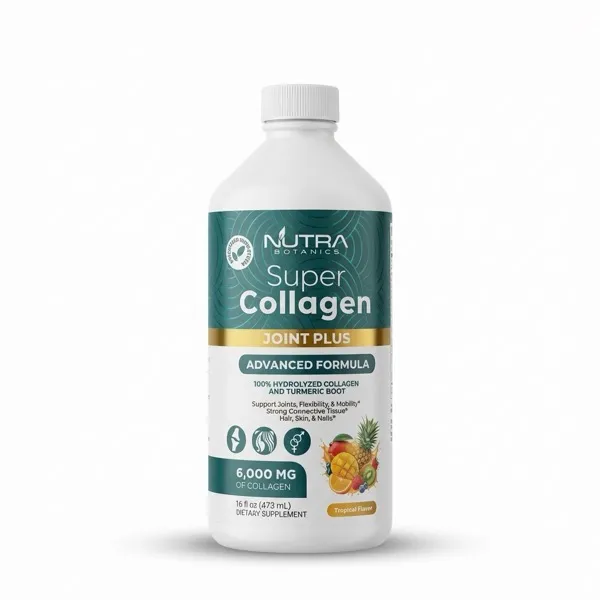
Super Collagen Liquid
Hydrolyzed Peptides · 30 servings
- 6,000mg hydrolyzed collagen peptides per serving
- Liquid format for maximum bioavailability
- Supports hair, nails, skin, and joints
- GMP & NSF certified · PhD-supervised testing
$39.95Free shipping over $75
Shop Super Collagen
Explore All Collagen Products
Browse the Nutra Botanics collagen range
- Multiple formats: liquid peptides, powders, capsules
- Compare serving sizes, sources, and stack partners
- Find the right format for your routine
- GMP & NSF certified · PhD-supervised testing
Shop the rangeSubscribe & save 20%
Browse Collagen