

Key Takeaways
- Hydrolyzed collagen peptides (types I and III) are the most research-supported form for systemic benefits
- 10–20g per day is the effective range across the majority of published clinical trials
- Marine, bovine, and poultry sources all show benefit — the hydrolysis process matters more than the source
- Best results appear with consistent daily dosing over 8–12 weeks, not short bursts
- Pair with vitamin C and adequate protein intake for optimal collagen synthesis
Picking a collagen supplement in 2026 comes down to a handful of decisions: hydrolyzed peptides vs undenatured type II, marine vs bovine source, powder vs liquid vs capsule, dose per serving, and whether the brand publishes third-party testing. This buyer's guide walks through each decision in the order you'll actually face it on a label, so you can read any product page and quickly tell whether it's worth the price.
How Collagen Supplements Work
The key question for decades was whether ingested collagen could actually reach the tissues that need it, or whether it would just be digested into generic amino acids like any other protein. Research has answered this clearly: hydrolyzed collagen is different.
When you consume hydrolyzed collagen peptides, enzymes in your digestive system break them into di- and tripeptides — very small fragments. These fragments are absorbed through the intestinal wall intact and enter the bloodstream. Specific dipeptides, particularly hydroxyproline-proline (Hyp-Pro) and hydroxyproline-glycine (Hyp-Gly), have been detected in the bloodstream after supplementation and shown to accumulate in skin, cartilage, and bone tissue.
Once they arrive at these tissues, these dipeptides act as signaling molecules — they stimulate fibroblasts in skin and chondrocytes in cartilage to produce new collagen, elastin, and hyaluronic acid. This is why collagen supplementation produces measurable structural improvements rather than just temporarily adding protein to the body.
Evidence-Backed Benefits of Collagen
Skin Health
This is the most studied area of collagen supplementation. Multiple randomized, double-blind, placebo-controlled trials have demonstrated that hydrolyzed collagen peptides improve skin elasticity, hydration, and wrinkle depth. A 2019 systematic review of 11 randomized controlled trials found consistent improvements in skin aging markers with collagen supplementation across study populations.
Results timeline for skin: hydration at 4–8 weeks, elasticity at 8–12 weeks, measurable wrinkle reduction at 12–16 weeks. For more on skin-specific dosing and results, see our guide to collagen for glowing skin, or read about collagen for skin texture if dimpling and uneven dermal density are part of the picture.
Joint Health
Collagen makes up 60–70% of the protein in cartilage. Studies on collagen for joint health have included both healthy athletes and people with osteoarthritis, with consistent findings: reduced joint discomfort, improved mobility, and slower cartilage degradation with 10–15g per day of hydrolyzed collagen peptides over 12–24 weeks.
A landmark 2008 Penn State study on athletes (Clark et al. 2008) found that collagen supplementation reduced joint pain during activity. For arthritis-specific research, see our detailed post on collagen for arthritis, and for general joint support, collagen for joint pain.
Hair and Nail Strength
Collagen provides proline and glycine — direct precursors to keratin, the protein that forms hair and nails. Studies on collagen and nails (Hexsel et al. 2017) have shown a 12% increase in nail growth rate and a 42% decrease in broken nails after 4 weeks. Hair benefits take longer, typically 3–6 months, but include improved thickness and reduced shedding.
Learn more: Collagen for hair and nails.
Gut Health
Collagen is rich in glycine — the most abundant amino acid in the gut mucosal lining. Glycine supports the integrity of tight junctions between intestinal cells, which maintains the barrier function of the gut. Many integrative practitioners use collagen for gut health as part of gut healing protocols. Research in this area is still emerging but mechanistically sound.
More on this topic: Collagen and gut health.
Bone Density
Collagen makes up approximately 90% of the organic matrix of bone — the scaffolding that calcium and other minerals attach to. Research on postmenopausal women (König et al. 2018) found that specific collagen peptides, combined with calcium and vitamin D, significantly reduced bone mineral density loss compared to calcium and vitamin D alone.
Collagen Powder vs. Liquid vs. Capsules
Not all collagen delivery formats are equal. Here's how they compare when choosing between liquid and powder:
Collagen Powder
The most popular format. Powders typically provide 10–20g of collagen per scoop, making it easy to hit the 10–15g daily target in one serving. Powders mix well into hot and cold beverages — hydrolyzed collagen is heat-stable and won't lose potency in coffee or tea. Most cost-effective per gram of collagen.
Liquid Collagen
Pre-dissolved collagen peptides in a ready-to-drink format. Offers higher bioavailability because the collagen is already in solution. Typically provides 5–10g per serving, so may require two servings to reach optimal dosing. Convenient for home use, but less practical for travel.
Lowest dose per serving — most capsule products provide 1–3g per serving, requiring 5–15 capsules to reach the 10–15g daily target.
Collagen Capsules
Lowest dose per serving — most capsule products provide 1–3g per serving, requiring 5–15 capsules to reach the 10–15g daily target. Better than nothing, but inconvenient at therapeutic doses.
For most people, powder or liquid is the practical choice. See our full comparison: Liquid collagen vs. powder.
How Much Collagen Per Day?
Dosing recommendations vary by goal:
For skin health: 2.5–10g per day. Multiple studies have shown measurable skin improvements at doses as low as 2.5g, with the most consistent results at 5–10g.
For joint health: 10–15g per day. Studies showing cartilage and joint benefits used doses in this range, typically over 12–24 weeks.
For comprehensive benefits across skin, joints, hair, gut, and nails: 10–15g per day is the evidence-backed sweet spot.
For comprehensive benefits across skin, joints, hair, gut, and nails: 10–15g per day is the evidence-backed sweet spot.
There is no established upper limit, and studies have used up to 40g per day without adverse effects. However, doses above 15g per day produce diminishing returns — the extra amino acids are simply metabolized as general protein.
For a deeper dive on dosing, see: How much collagen per day?
When to Take Collagen (and What to Take It With)
The timing of collagen supplementation has less impact than consistency. Research has not established a superior time of day — morning, post-workout, or evening all produce equivalent results if the dose is consistent.
What matters far more than timing is what you take with collagen:
Vitamin C is non-negotiable. It is a required cofactor for prolyl hydroxylase and lysyl hydroxylase — the enzymes that convert proline and lysine into the specific forms needed to build the collagen triple-helix. Without adequate vitamin C, collagen synthesis is impaired. Take 500–1,000mg of vitamin C with your collagen daily.
Beyond vitamin C: zinc supports collagen synthesis enzymes, copper is essential for cross-linking collagen fibers, and staying well-hydrated supports collagen distribution throughout the body.
How Long Does Collagen Take to Work?
Results from collagen supplementation are dose-dependent, goal-dependent, and individual-dependent — but clinical research on how long collagen takes to work gives us realistic timelines:
Weeks 4–6: First noticeable changes in skin hydration and nail strength. Some people notice fuller-looking skin earlier due to improved hydration in the dermis.
Weeks 8–12: Measurable improvements in skin elasticity and reduction in fine line depth. Joint comfort begins to improve for many people in this window.
Weeks 12–24: More significant joint benefits emerge.
Weeks 12–24: More significant joint benefits emerge. Hair thickness changes become noticeable for people using collagen for hair support.
90+ days: Cumulative benefits across all areas. Long-term users at 10–15g per day consistently report the most significant before-and-after differences — see what 90 days of daily collagen actually changes for the week-by-week breakdown.
See the detailed breakdown: Collagen 90-day results timeline.
Signs Your Body May Be Collagen-Deficient
Collagen decline is gradual — which means the early signs of collagen deficiency appear slowly and are easy to attribute to "just getting older." Key indicators include:
Skin that has lost its snap and firmness, appearing thinner or crepey. Fine lines and wrinkles that deepen faster than expected. Joint stiffness or discomfort that wasn't present a few years ago. Nails that split, peel, or break easily. Hair that sheds more or appears thinner at the scalp. Slow wound healing or skin that bruises more easily.
These signs typically cluster together because the root cause — declining collagen production — affects all collagen-containing tissues simultaneously.
Learn more: 7 signs your body needs collagen.
Learn more: 7 signs your body needs collagen.
Who Should Take Collagen?
Women Over 40
Women experience the sharpest collagen decline during and after menopause — losing up to 30% of skin collagen in the first five post-menopausal years due to falling estrogen. Post-40 collagen needs have been particularly well-studied in postmenopausal women and the research shows robust benefits for skin, joints, and bone density.
See: Collagen for women over 40.
Athletes and Active Adults
Collagen supports tendons, ligaments, and joint cartilage — the connective tissues most stressed by training. Research shows collagen peptides taken before exercise, paired with vitamin C, may specifically enhance collagen synthesis in tendons during the post-exercise repair window.
Anyone Over 25 with Aesthetic Goals
Because collagen declines start in the mid-20s, starting supplementation in your late 20s to mid-30s is a proactive approach to maintaining the skin, hair, and nail quality you have. The research on skin benefits and hair and nail benefits supports earlier supplementation as a maintenance strategy.
People with Joint Concerns
Whether from aging, arthritis, or high-impact sport, joint cartilage degradation responds to consistent collagen supplementation. Those with diagnosed osteoarthritis should discuss supplementation with their healthcare provider.
Common Collagen Myths — Debunked
Myth: Collagen supplements can't be absorbed. False. Research has confirmed that specific collagen-derived dipeptides are absorbed intact and reach target tissues — one of several common collagen myths debunked in detail.
Myth: You can get enough collagen from food. Difficult in practice. You would need 3–7 cups of strong bone broth daily to reach 10–15g — supplements are the practical solution.
Myth: Expensive collagen is better. Not necessarily. What matters is whether it's hydrolyzed, the source (bovine Type I/III or marine Type I), the dose per serving, and third-party testing.
Men experience the same collagen decline with age and benefit from the same joint, skin, and recovery support.
Myth: Collagen is only for women. False. Men experience the same collagen decline with age and benefit from the same joint, skin, and recovery support.
Full myth breakdown: Collagen myths vs. facts.
Is Collagen Safe?
Collagen has an excellent safety profile. It is a food-derived protein found naturally in bone broth, meat, and gelatin. Long-term studies — some running 24 months — have found no adverse effects on liver function, kidney function, or blood markers in healthy adults.
The most commonly reported side effect is mild, transient digestive discomfort when first starting. Starting at 5g per day and increasing gradually over 2 weeks minimizes this.
People with fish allergies should use bovine collagen rather than marine collagen. Pregnant and breastfeeding women should consult their healthcare provider before starting any new supplement. For a complete safety overview: Collagen side effects and safety.
What is the best collagen supplement to take?
How long until I see results from collagen?
Should I take collagen every day?
Can I take collagen with other supplements?
Is marine or bovine collagen better?
Does collagen break a fast?
Can vegans take collagen?
What happens when you stop taking collagen?
Experience the Collagen Difference
GMP & NSF certified collagen formulas with PhD-supervised testing, designed for maximum absorption and real results.*
Shop Super Collagen LiquidFrequently Asked Questions
What is the best collagen supplement to take?
How long until I see results from collagen?
Should I take collagen every day?
Can I take collagen with other supplements?
Is marine or bovine collagen better?
Does collagen break a fast?
Can vegans take collagen?
What happens when you stop taking collagen?

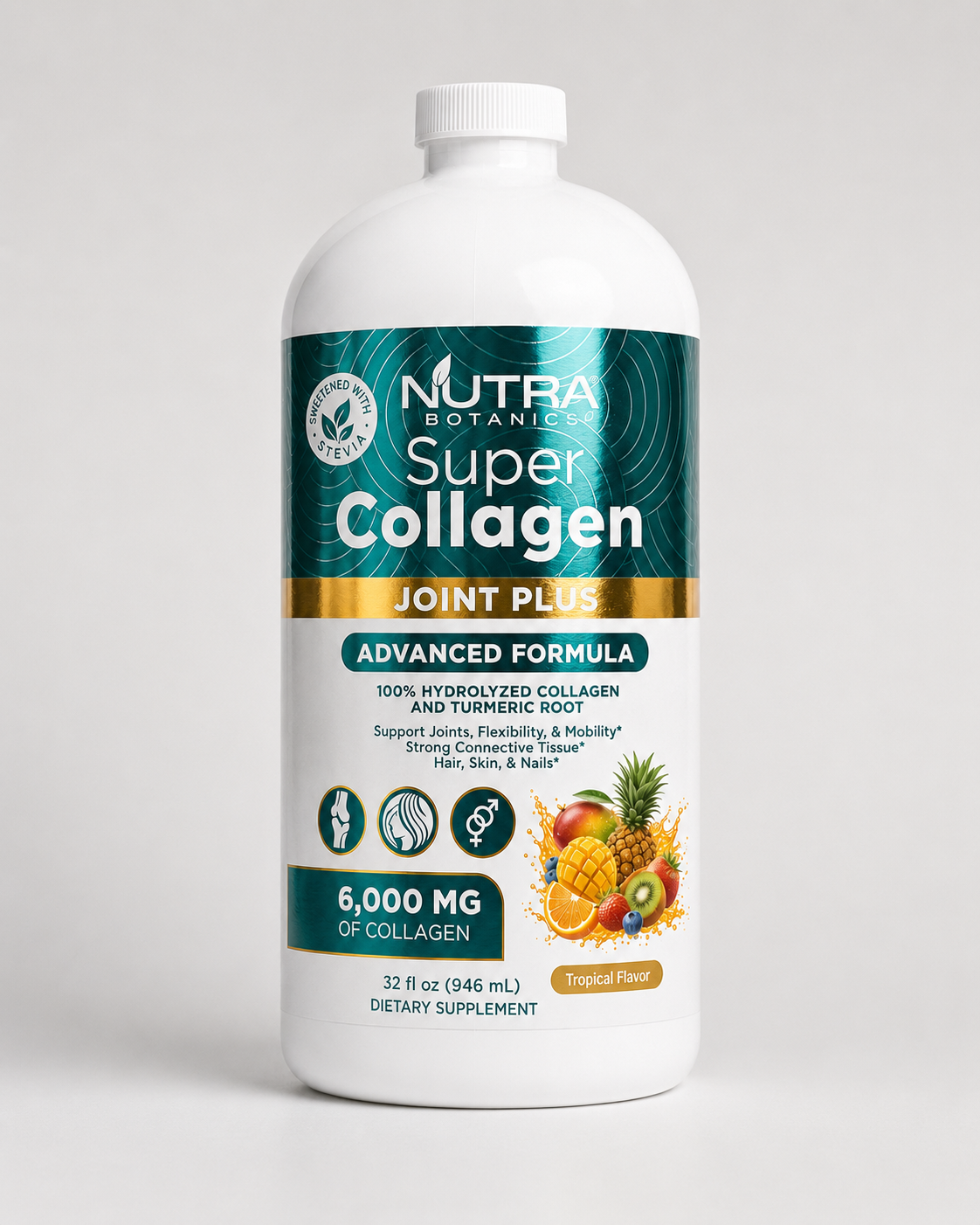
Super Collagen Joint Plus
Type II collagen + glucosamine + MSM · 60 capsules
- Hydrolyzed collagen types I, II, and III
- Glucosamine and MSM for joint comfort support
- Hyaluronic acid for connective-tissue hydration
- GMP & NSF certified · PhD-supervised testing
See pricingFree shipping over $75
Shop Collagen Joint Plus
Explore Collagen Support
Browse the Nutra Botanics collagen range
- Liquid, capsule, and joint-targeted formulations
- Compare peptide profiles and daily doses
- GMP & NSF certified · PhD-supervised testing
- Subscribe to save 20% on recurring shipments
Shop the rangeSubscribe & save 20%
Browse Collagen